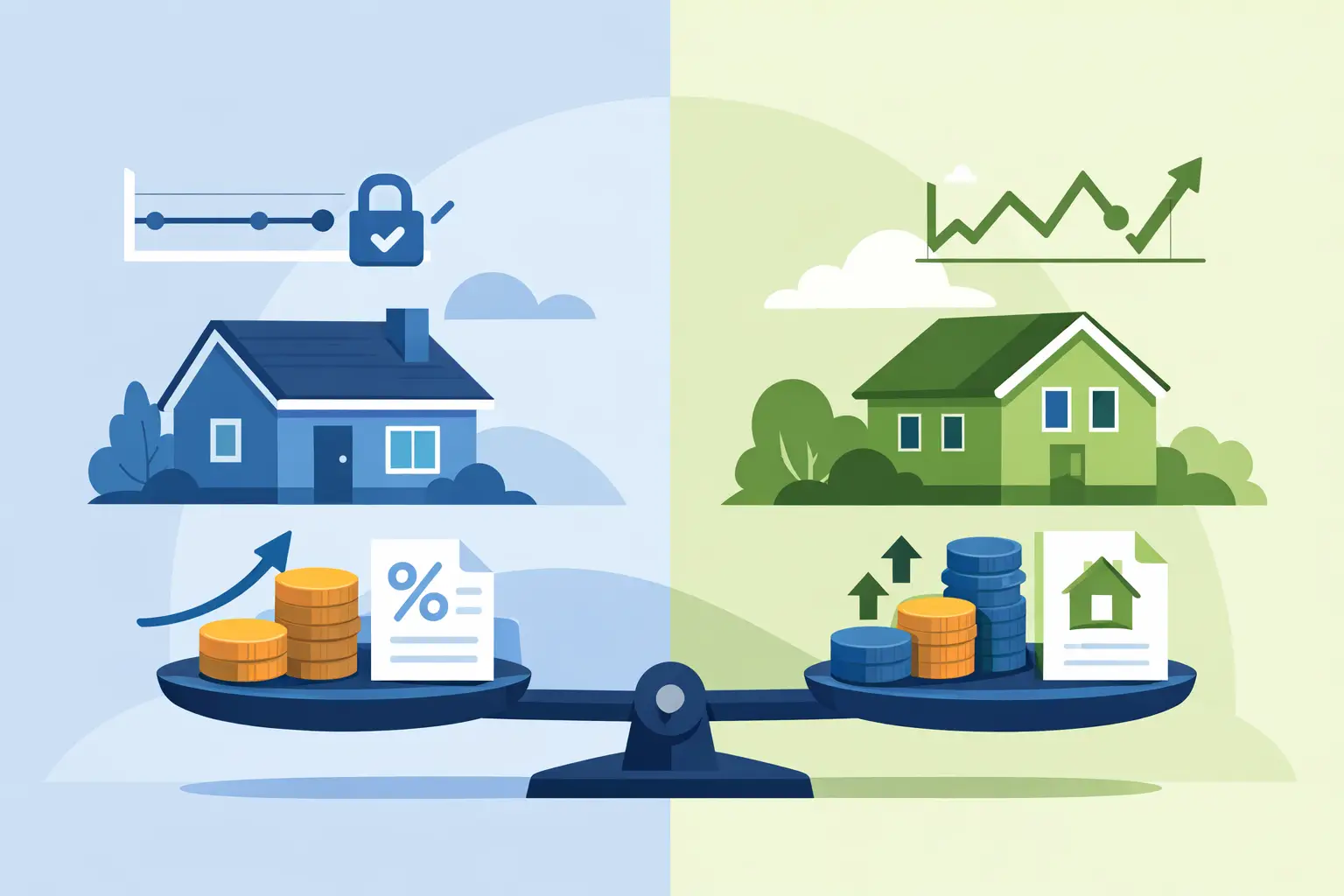
Choosing a mortgage rate often feels simple until you are the one signing the paperwork. That is where fixed versus variable mortgage rates become a real decision, not just a finance term. The right choice can affect your monthly budget, your stress level, and how comfortable you feel with your home purchase over the next several years.
For many buyers, this is not really about finding the “best” rate type in the abstract. It is about finding the rate that fits your income, your goals, and your tolerance for change. A lower rate is appealing, but predictability matters too. The better question is not which option wins in every market. It is which one works best for your situation.
Fixed versus variable mortgage rates: what is the difference?
A fixed-rate mortgage keeps your interest rate the same for the length of your term. If you choose a five-year fixed term, your rate does not change during those five years, even if the broader lending market moves up or down. In most cases, that means your payment stays the same as well, which makes budgeting much easier.
A variable-rate mortgage works differently. The rate can move during your term based on changes to the lender’s prime rate, which is influenced by central bank rate decisions and broader economic conditions. Depending on the mortgage product, your payment may change when rates change, or your payment may stay the same while more or less of it goes toward interest.
That distinction matters. A variable mortgage is not automatically risky, and a fixed mortgage is not automatically expensive. Each one has strengths, and each one comes with trade-offs that deserve a closer look.
When a fixed rate makes more sense
Fixed rates are often the better fit for buyers who want stability. If you are buying your first home, managing daycare costs, or trying to keep a close eye on monthly expenses, a steady payment can bring real peace of mind. You know what to expect, and that consistency helps with planning.
This can be especially useful if your finances feel stretched during the first few years of homeownership. Maybe you are adjusting to property taxes, utilities, maintenance, and all the other costs that come with owning a home. In that case, removing rate uncertainty can be valuable.
Fixed rates also appeal to buyers who believe interest rates could rise and want protection from that possibility. Locking in a rate means you are insulated from market increases during your term. You may not get the lowest available starting rate, but you gain certainty.
The trade-off is that fixed rates are often higher than variable rates at the start. You are paying a bit more in exchange for predictability. Fixed mortgages can also come with steeper penalties if you break the mortgage early, which matters if you might move, refinance, or change lenders before the term ends.
When a variable rate makes more sense
Variable rates often attract buyers because they can start lower than fixed rates. That lower starting point can reduce your monthly costs and, over time, may save money if rates stay stable or fall. For buyers comfortable with some uncertainty, that can be a worthwhile advantage.
A variable mortgage may suit someone with financial flexibility. If your household income is strong, you have room in your budget, or you are comfortable handling payment changes, the ups and downs may feel manageable rather than stressful. Some borrowers also like the idea of benefiting when rates trend downward.
Variable products can also be attractive for buyers who may not keep the mortgage for the full term. In many cases, the penalty for breaking a variable mortgage is lower than for a fixed mortgage. That is not always the deciding factor, but it can matter if you expect to move, sell, or refinance within a few years.
The trade-off is obvious. If rates rise, your borrowing cost can rise with them. That does not mean variable is the wrong choice, but it does mean you need enough breathing room in your finances to handle changing conditions.
Fixed versus variable mortgage rates in a changing market
This is where many buyers get stuck. They try to predict what the market will do next and base the entire decision on that forecast. The problem is that rate predictions are often wrong, even from experienced observers.
Instead of trying to outguess the market, it is usually more practical to look at your own financial resilience. Ask yourself what would happen if your rate increased by one or two percentage points. Would your monthly budget still work? Would you still sleep well at night? If the answer is no, a fixed rate may be the better fit even if variable looks cheaper today.
On the other hand, if you have room in your cash flow and understand the trade-offs, variable may still be a smart option. The goal is not to guess perfectly. The goal is to choose something you can live with confidently.
This is especially important for buyers in active housing markets, where it is easy to focus heavily on purchase price and overlook financing structure. But the mortgage terms you choose can shape your ownership experience just as much as the home itself.
Questions to ask before you choose
A good mortgage decision starts with a clear look at your own circumstances. Your income matters, but so does its consistency. A salaried buyer with stable earnings may feel differently about rate risk than a self-employed buyer whose monthly cash flow changes.
Your future plans matter too. If you are fairly sure you will stay in the home for years and want budgeting certainty, fixed may feel more comfortable. If you expect changes such as a move, a job transfer, or a refinance, the flexibility of variable could be appealing.
It also helps to think about your personality, which sounds less financial but matters a lot. Some people can tolerate payment fluctuations without much concern. Others find uncertainty exhausting. There is nothing wrong with either response. The best mortgage is one that supports your finances and your peace of mind.
The cost question is not just about the rate
Many borrowers compare fixed and variable options based only on the headline rate. That is understandable, but it can be misleading. A lower rate does not always mean a better mortgage overall.
You also need to consider prepayment privileges, penalty structure, portability, and how the mortgage fits with your larger goals. For example, if you plan to sell your home before the term ends, a lower rate could be offset by a costly penalty. If you want to make extra payments and reduce your balance faster, the mortgage terms around prepayment matter.
This is one reason working with an advisor can make such a difference. Comparing rates is easy. Comparing mortgage strategy is where the real value comes in.
What many first-time buyers overlook
First-time buyers often focus on qualification and monthly payment, which makes sense. But once approved, they sometimes rush through the rate decision because they are already tired from the home search, the offer process, and all the paperwork.
That is exactly when slow, clear guidance matters most. Fixed versus variable mortgage rates should not be treated like a last-minute checkbox. This choice affects how secure or exposed you may feel after closing, especially in the first year when every new homeowner expense feels fresh.
If you are buying in Edmonton or nearby communities, local market conditions can also shape the conversation. Home price, property type, and your expected timeline in the home may all influence which mortgage structure makes more practical sense. A buyer purchasing a long-term family home may approach the decision differently than someone buying with a shorter horizon.
At Bhupinder Singh Real Estate & Mortgage, this is where integrated real estate and mortgage advice can be especially helpful. Looking at the property decision and the financing decision together often gives buyers a clearer path forward.
There is no one-size-fits-all answer
Some buyers should lock in and not think twice. Others are well positioned to benefit from a variable option. The right answer depends on your comfort with risk, your financial cushion, your plans for the property, and how much certainty you want over the next few years.
If you feel torn, that usually means both options have some merit. In that case, the smartest move is not chasing a trend or copying what someone else did. It is taking a close look at your numbers and choosing the mortgage that helps you feel prepared, not pressured.
A home should feel like progress, not a monthly source of worry. The rate you choose should support that feeling from day one.