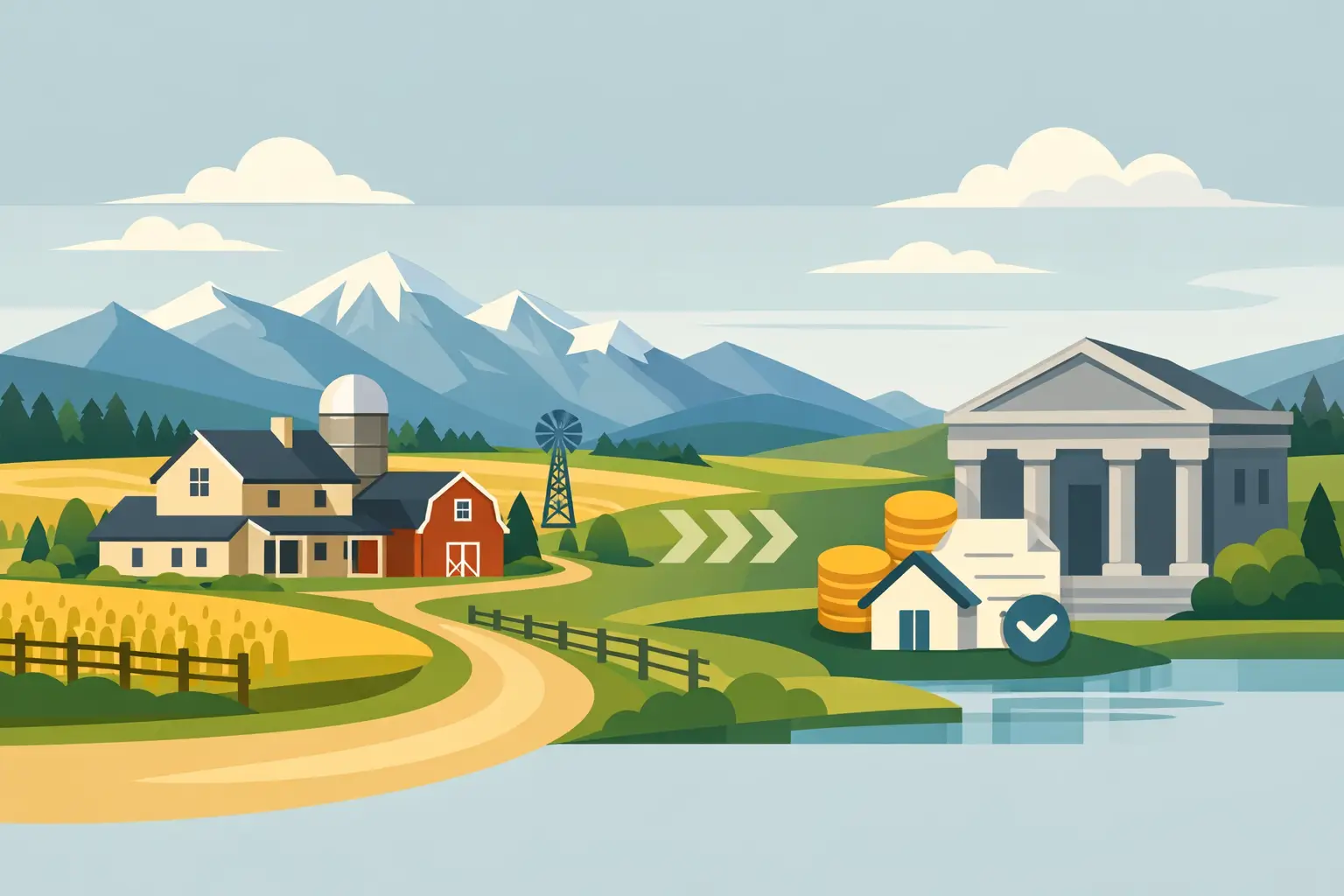
A quarter section with a home, a few outbuildings, and enough land to breathe can look perfect on paper. Then the financing conversation starts, and buyers quickly learn that a rural property mortgage Alberta approval does not always work like a standard mortgage on a city home. The property itself, the land size, the services on site, and even the road access can all affect what a lender is willing to do.
That does not mean rural properties are hard to finance. It means they need to be matched with the right lender, the right mortgage structure, and realistic expectations early in the process. When you understand what lenders are actually looking for, the path becomes much clearer.
How a rural property mortgage Alberta is different
With a typical suburban home, lenders usually have plenty of comparable sales, standard servicing, and a straightforward resale market. Rural property is different because value can be harder to measure and resale may take longer if the lender ever needs to recover the property.
That extra risk changes the underwriting. A lender may look more closely at acreage size, the type of well and septic system, whether the home is owner-occupied, and how much of the property is residential versus income-producing or agricultural. Some lenders are comfortable with these details. Others are not.
This is why buyers often get mixed answers when they start shopping around. One bank may treat the property as a normal residential purchase. Another may decline it for land size alone. Neither answer is unusual.
What lenders look at first
The first question is usually not your income. It is the property.
Lenders want to know whether the home and land fit within their residential lending guidelines. In many cases, the sweet spot is a rural home on a modest acreage that is primarily used as a residence. Once a property becomes too large, too specialized, or too tied to farm use, financing can shift out of standard mortgage territory.
A few factors come up often.
Acreage size
Land size matters because many residential lenders cap the number of acres they will finance under standard mortgage rules. The exact limit depends on the lender. A property with a house on 5 acres may be easy for one lender and still acceptable for many others. A home on 40 acres may narrow your options. A full farm or mixed-use operation can require a very different lending approach.
This does not mean larger properties cannot be financed. It means the lender may only finance the home and a limited portion of the land value, or they may require a bigger down payment.
Property use
If the property is mainly a place to live, approval is often simpler. If there is active farming, leased land, significant agricultural income, or commercial outbuildings, the file gets more nuanced. Lenders will want to know whether they are financing a residence, a hobby farm, or an income-producing rural operation.
That distinction affects underwriting, appraisals, and down payment expectations.
Water, septic, and access
Urban buyers do not usually think much about utility questions. Rural lenders absolutely do. They may ask about well type, water quality, septic condition, year-round road access, and whether the property has legal and practical access in all seasons.
A property that looks attractive but has unresolved servicing issues can become harder to finance, even if the buyer is otherwise strong.
Condition and marketability
Lenders are not just financing your lifestyle choice. They are financing an asset that must be marketable. If the home is in poor condition, has major deferred maintenance, or includes unusual improvements that are hard to value, the appraisal can create problems.
For rural homes, appraisals matter even more because comparable sales may be limited. If the appraised value comes in low, buyers may need to increase their down payment or renegotiate the purchase price.
Down payment expectations for rural property
One of the biggest misunderstandings is assuming rural property financing follows the same rules as an in-town purchase in every case. Sometimes it does. Sometimes it does not.
If the property fits standard insured or conventional mortgage guidelines, your minimum down payment may look familiar. But if the acreage is larger, the use is more complex, or the property falls outside insurer rules, the required down payment can increase.
In practical terms, buyers should be prepared for a range. Some rural properties can be financed with relatively low down payments if they are clearly residential and lender-friendly. Others may require 20 percent or more. The more unique the property, the more likely flexibility in lender choice will matter.
This is one reason pre-approval alone is not enough for rural purchases. A general pre-approval tells you what you qualify for financially. It does not guarantee the specific property will fit lender guidelines.
Income, debt, and cash reserves still matter
Even when the property is the main challenge, your financial profile still drives the approval.
Lenders will review your income stability, debt ratios, credit history, and available funds. For salaried buyers with strong credit and manageable debts, the process is usually smoother. Self-employed buyers can absolutely get approved too, but income documentation needs to be well prepared.
Cash reserves can also help. Rural ownership sometimes comes with maintenance items that urban properties do not, from septic servicing to well repairs to outbuilding upkeep. A borrower who closes with no financial cushion may look riskier than one with savings left after the purchase.
Why the appraisal matters so much
In a city neighborhood, appraisers often have several similar recent sales to work with. Rural areas may have fewer direct comparables, and no two properties are exactly alike. One may have a newer home but less usable land. Another may have multiple shops, older systems, or different access conditions.
That makes appraisals more sensitive. Buyers should not assume sale price and appraised value will match automatically.
If the appraiser adjusts heavily for land, outbuildings, condition, or location, the final value may land below expectations. That can affect both mortgage amount and closing strategy. In some cases, the deal still works with a larger down payment. In others, it makes sense to revisit price before moving forward.
Common issues that delay approval
Most rural mortgage problems are not surprises to experienced advisors. They are predictable issues that were not addressed early enough.
One common problem is discovering too late that the acreage exceeds a lender’s policy. Another is learning that a property marketed as residential has farm-use features that change the financing category. Poorly documented wells, aging septic systems, or appraisals with limited comparable sales can also slow things down.
Sometimes the issue is simply choosing the wrong lender first. A buyer may apply at a bank with strict rural guidelines and get discouraged, even though another lender would have viewed the same property more favorably.
How to improve your chances of approval
The best move is to treat rural financing as property-specific from the start.
Before making an offer, try to confirm the acreage, zoning, property use, servicing details, and any features that could affect lender appetite. If there are outbuildings, leased land, or business use, bring that up early. It is much better to structure the mortgage around the real property profile than to hope those details do not matter.
It also helps to keep your purchase budget realistic. Rural buyers sometimes focus on the list price without leaving room for appraisal differences, repair requests, or higher closing costs. A little flexibility can save a lot of stress.
Working with an advisor who understands both the property side and the financing side can make a real difference here. Instead of finding a property first and sorting out problems later, you can identify which listings are more likely to fit your financing options before you get too far in.
When rural property financing gets more specialized
Not every rural purchase fits inside a simple residential mortgage. If the land is large, the use is agricultural, or the income picture is more complex, you may need a lender that is comfortable with rural and farm-adjacent files.
That is not a bad thing. It just means the solution may be more specialized. The right mortgage for a family home on a few acres is not always the right mortgage for a working acreage with multiple revenue streams. Good advice matters because the cheapest advertised rate is not always attached to the lender that can actually close the property you want.
For buyers in Edmonton and surrounding Alberta communities, that local context matters too. Rural markets around the region are active, but each area can bring its own appraisal patterns, servicing expectations, and resale considerations. Local knowledge helps set better expectations before you spend money on inspections and financing steps.
A rural property can offer space, privacy, and a lifestyle that is hard to replicate in town. The financing piece just needs the same level of care as the property search. When the land, lender, and mortgage strategy line up properly, the process feels a lot less uncertain and a lot more doable.